10 Sep 2026
Fund Transfer Methods Supporting Responsible Participation Standards in Mobile Table Game Applications
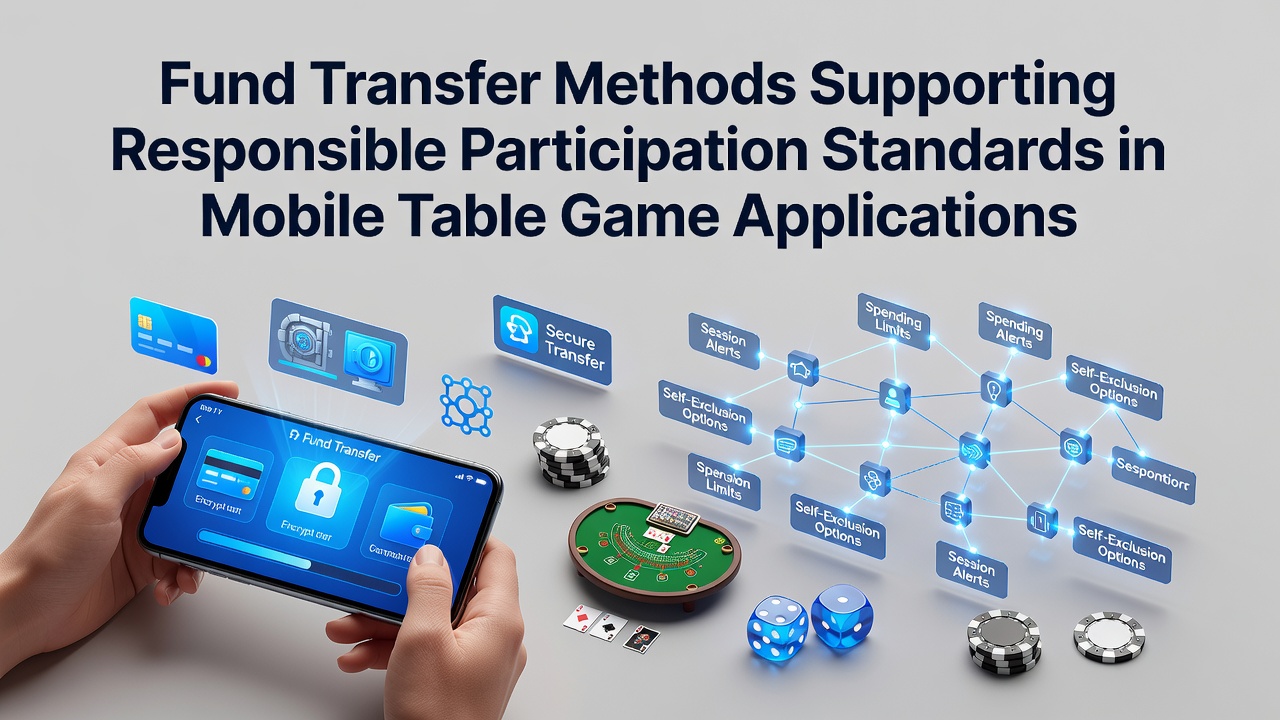
Fund transfer methods in mobile table game applications have evolved to incorporate tools that align with responsible participation standards, enabling real-time monitoring and user-defined controls across platforms that offer blackjack, poker, and roulette. These systems connect payment processing directly to account settings that enforce deposit caps, session timers, and self-exclusion protocols, creating a framework where transactions support both access and restraint. Data from regulatory bodies shows that integrated transfer options reduce instances of unchecked spending by routing every deposit through verification layers before funds reach the game interface.
Core Transfer Mechanisms in Mobile Environments
Bank transfers, e-wallets, and prepaid vouchers form the primary channels that operators embed into mobile table game applications. Each method carries distinct features that tie into participation safeguards: bank transfers often include delayed processing windows that allow users to review and cancel pending deposits, while e-wallets such as those linked to digital banking apps provide instant notifications and spending dashboards. Prepaid options limit exposure by requiring users to load fixed amounts in advance, which prevents automatic top-ups without additional confirmation steps. Observers note that these mechanisms operate through APIs that sync with backend compliance software, flagging transactions that exceed thresholds established during account setup.
Payment providers have expanded support for these controls in response to requirements from oversight agencies. In the United States, the Nevada Gaming Control Board has documented how licensed platforms must route all deposits through systems that log activity against individual limits. Similar patterns appear in Canadian provincial frameworks, where transfer logs feed directly into provincial reporting databases for audit purposes. The result is a network of checkpoints that verify user status before any table game session begins.
Alignment with Participation Standards
Responsible participation standards require fund transfers to function as gatekeepers rather than simple conduits. Applications now embed limit-setting interfaces at the deposit stage, prompting users to confirm or adjust caps each time a transfer is initiated. When a user approaches a predefined threshold, the system halts the transaction and displays current session statistics alongside historical data. This approach stems from technical integrations that connect payment gateways to player management modules, ensuring that no transfer bypasses the control layer.
Studies conducted by the National Council on Problem Gambling reveal that platforms using synchronized transfer and limit systems record higher rates of voluntary limit adherence compared with those relying on separate tools. The synchronization allows automatic enforcement across devices, so a limit set on one session carries forward regardless of login method or game type. Researchers have tracked these patterns through anonymized transaction datasets that span multiple quarters, highlighting consistent drops in rapid successive deposits when such features activate.

Regional Regulatory Developments Through 2026
European and Australian regulators have introduced updated guidelines that tie transfer authorization to verified participation tools. Malta's gaming authority, for instance, mandates that every approved payment processor demonstrate compatibility with real-time exclusion lists before integration approval. In Australia, state-level commissions require operators to submit quarterly reports detailing how transfer methods interact with harm-minimization protocols. These reports increasingly reference data collected through September 2026, when several jurisdictions plan coordinated reviews of mobile platform compliance metrics.
Industry reports from the Australasian Gaming Council indicate that operators adopting unified transfer and control systems achieve faster audit clearance because transaction records already contain embedded compliance markers. The approach reduces manual review workloads while maintaining transparency for oversight bodies. Those who have examined cross-border data flows observe that standardized APIs simplify reporting across regions without compromising local rule variations.
Technical Implementation Examples
One documented implementation involves an e-wallet provider that embeds session timers directly into its mobile SDK, pausing transfers once a user-selected time limit expires. Another case features a bank transfer service that cross-references incoming deposits against a shared self-exclusion registry maintained by multiple operators. These examples demonstrate how payment infrastructure can extend beyond basic movement of funds to actively support the standards framework. Figures released by academic research groups at the University of Nevada show measurable reductions in deposit frequency following the rollout of such combined features in licensed environments.
Conclusion
Fund transfer methods continue to merge with responsible participation infrastructure in mobile table game applications through technical linkages that enforce limits at the point of transaction. Regulatory updates scheduled around September 2026 are expected to further standardize these connections across additional jurisdictions, drawing on existing models from North American and Australasian oversight bodies. The patterns established so far indicate that payment systems function most effectively when they operate as integrated components of broader compliance architectures rather than isolated utilities.